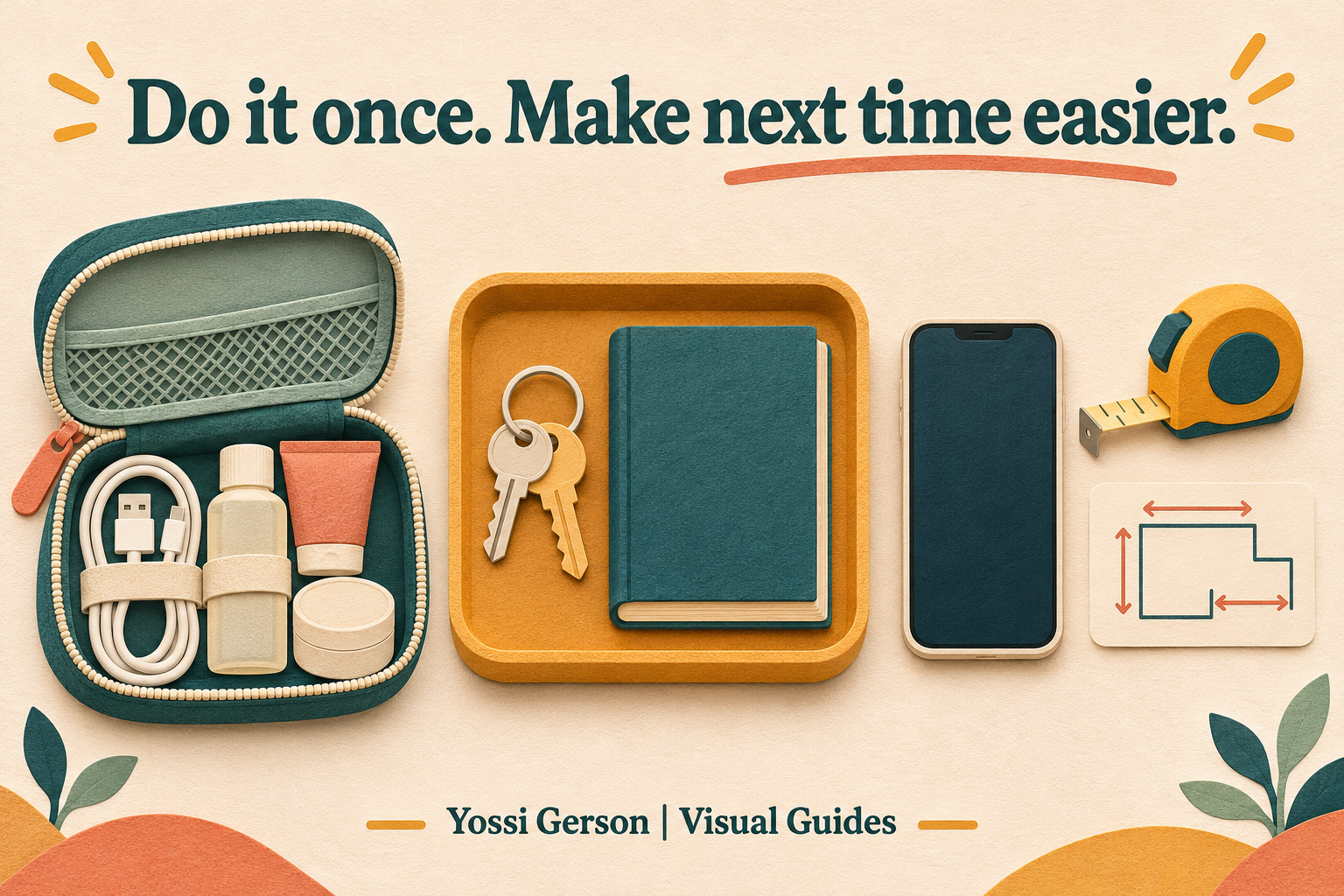
You get to the store, then realize the measurement is at home. You unplug a desk setup, then spend longer figuring out the cables than moving the desk. You pack for one night and still have to hunt for the same small essentials.
These are small annoyances, but they tend to repeat. The fixes below put useful information or a needed object where your future self will look for it. None needs a new app or an elaborate organizing system. Pick the one that matches something you keep having to redo.
1. Photograph the appliance label before you need a replacement part
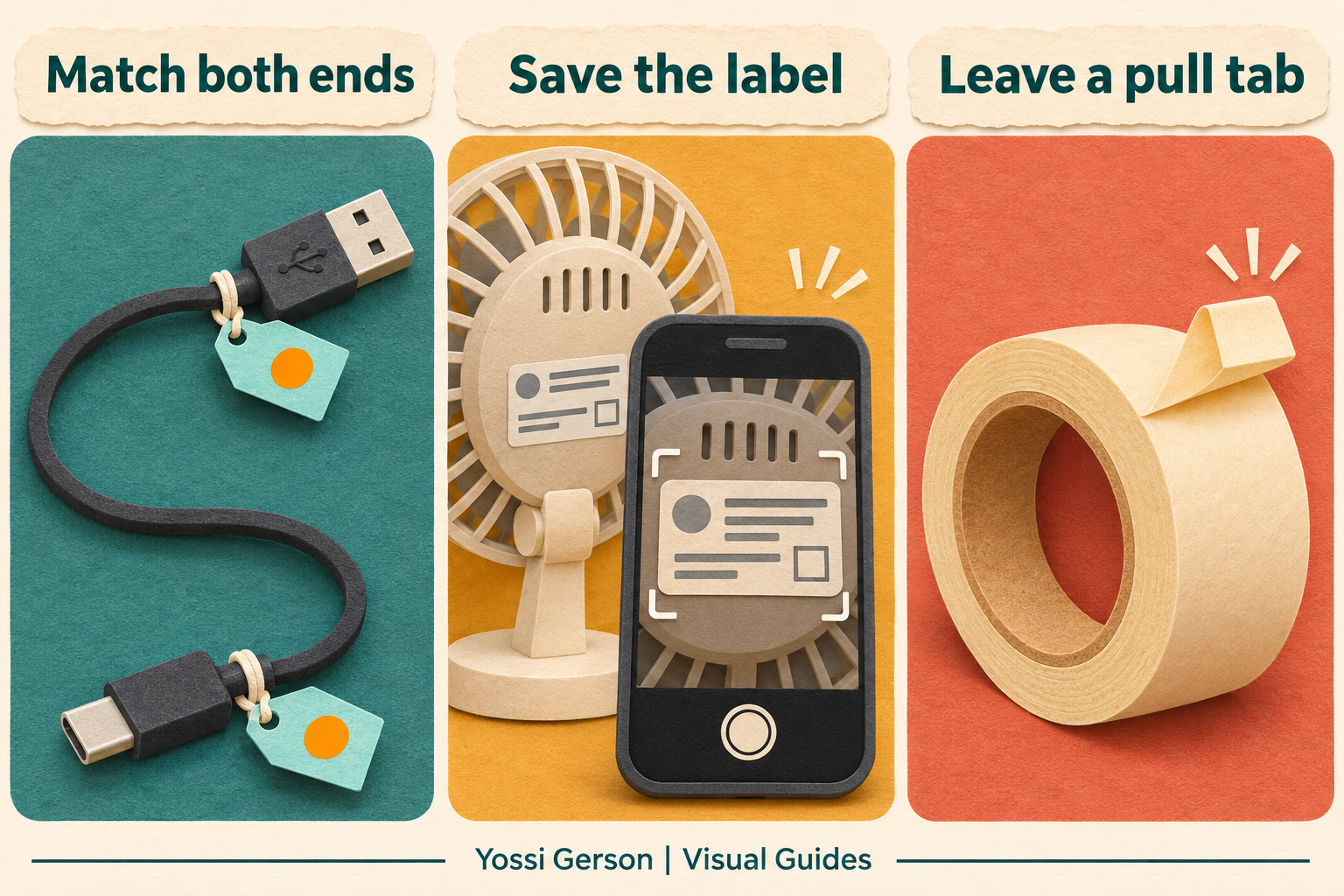
The name on the front of an appliance may identify the brand or product family without identifying the exact model. Before shopping for a filter, attachment or other replacement, take a clear photo of the model label and save it somewhere searchable.
Make it usable: Give the photo or its note a plain title, such as “Vacuum model label.” If you already have the manual, keep its link beside the photo. A useful reference note could contain:
- Appliance: ______.
- Exact model: ______.
- Label photo: ______.
- Manual or confirmed compatible part: ______.
The catch: A photo helps you identify the appliance; it does not prove that a particular replacement fits. Check compatibility against the exact model before buying. Keep labels containing serial numbers or other identifying information in your private notes.
2. Label both ends of a cable before unplugging the setup
Labeling one end helps until the other end disappears behind the desk. Put a matching short label near each end of a cable while you can still see what it connects.
Try it on: A detached USB cable used for a desk camera. Mark both ends “camera,” or use the same distinctive symbol on both. If you have several similar cables, use different labels rather than putting the same colored dot on all of them.
Take one overview photo of the existing arrangement before disconnecting it. The labels identify the cable; the photo records the arrangement. Together, they answer two different questions when you put things back.
3. Keep a measurement note with units and a quick sketch
“Shelf: 24” is a future guessing game. Is that inches or centimeters? Is it the width of the shelf, the available opening or the object you want to put on it?
Record the object, the dimension, the units and what you actually measured. Add a simple sketch or photo if the shape is awkward.
Instead of: “Shelf 24.”
Save: “Clear opening in the hallway shelf: 24 inches wide. Measure height and depth before choosing a storage box.”
Keep related measurements in one phone note with a searchable title, such as “Home storage measurements.” Date anything that could change, and check the dimensions again if you rearrange or replace the furniture. A saved number is only useful when you know what it describes.
If useful measurements are buried among reminders and saved links, A Ten-Minute Reset for Your Notes offers a short way to give each note a clearer next use.
4. Keep the small overnight essentials together
Packing gets repetitive when the same small objects live in five different places. Use a pouch for the essentials that can stay together between trips: a charging cable, a toothbrush or other items you routinely need.
Start with what you already have. If something is also used every day, keep a short reminder in the pouch rather than assuming it is packed. A card reading “Add daily charger” is more useful than discovering an empty pocket after you leave.
Make the next trip easier: After returning, replace anything you used up and return the pouch to the travel bag. This works best as a small kit you maintain, rather than another bag you have to unpack and rebuild each time.
5. Give outgoing items a departure spot
A book to return, an item borrowed from a friend and a package to drop off have something in common: they need to leave the house. Give them one visible spot you check before going out.
A tray, basket or designated shelf can work. Add a short destination note when the purpose is not obvious: “Bring to Sam” or “Drop at the collection point.”
Keep it useful: Only put outgoing items there. If it becomes a home for random papers and loose objects, the reminder disappears into the clutter. Clear the spot as items leave, and keep routine storage somewhere else.
6. Fold back the end of a roll of tape
Before putting a roll away, fold a small piece of its loose end back onto itself so the sticky sides meet. That leaves a nonsticky tab you can grip next time, instead of searching around the roll for the edge.
Use it for: Ordinary household tape that you regularly put away between uses. Start with a small fold; a large flap simply uses more tape.
If the tab is inconvenient for a particular tape or dispenser, skip it. The point is to remove a recurring nuisance, not add a ritual to every object you own.
7. Keep a possible return and its information together
An item you are still deciding about can become a second project if its packaging, accessories and order information scatter around the house.
Give it a temporary home until you decide. Keep the relevant packaging and accessories with it, and save the order confirmation in a note you can find. If there is a return deadline, record the actual deadline from the seller's policy and set a reminder before it.
A useful note: “Decide whether to keep the lamp by Thursday. Packaging is beside the entry shelf; order confirmation is linked here.”
This is an organization trick, not a promise that an item qualifies for a return. Check the seller's conditions for that purchase. Once you keep or return the item, clear its temporary spot and close the reminder.
Start with one repeat annoyance
You do not need to adopt all seven. Think about the last time you had to go back for a number, find a cable's other end or pack the same small items again. Choose the matching fix and try it once.
A good life hack leaves less work for next time. If maintaining it becomes more annoying than the problem, simplify it or let it go.